
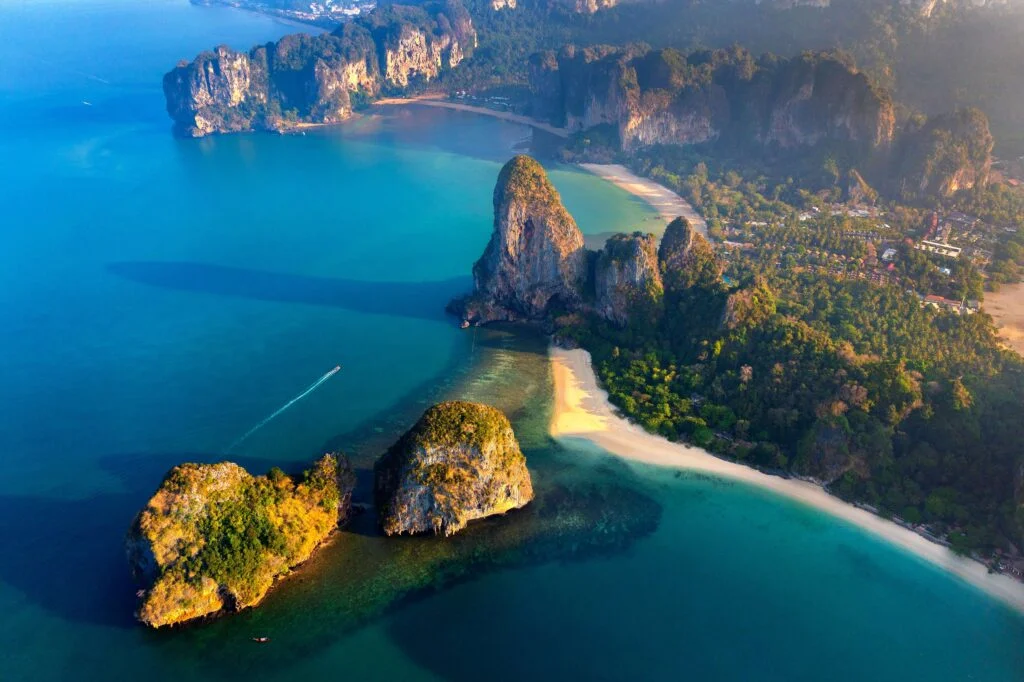
Picture this: you’re on the sun-bleached deck of a longtail boat, salt on your lips, emerald water stretching in every direction, and the silhouette of a limestone karst rising like a cathedral from the sea ahead. That’s Thailand island hopping — and no travel experience on earth quite compares.
With over 1,400 islands scattered across two coasts, Thailand offers more variety per square nautical mile than almost anywhere in Southeast Asia. The challenge isn’t finding paradise — it’s choosing which slice of it to visit first. This guide gives you everything you need: the best islands, the smartest routes, real costs, and the kind of insider knowledge that only comes from truly knowing these waters. Whether you have 7 days or three weeks, you’ll leave here with a clear plan.

Thailand Island Hopping at a Glance
- Total Thai islands: 1,400+ (about 60 are accessible to visitors)
- Main coasts: Andaman Sea (west) and Gulf of Thailand (east)
- Best time to visit Andaman islands: November to April
- Best time to visit Gulf islands: Year-round, but November to April is optimal
- Ferry costs: 200 – 1,200 THB depending on route and vessel
- Minimum recommended trip length: 7 days
- Main entry airports: Phuket (HKT), Krabi (KBV), Koh Samui (USM)
- Currency: Thai Baht (THB); 1 USD ≈ 35 THB in 2026
Andaman Sea vs. Gulf of Thailand: Choosing Your Side
The single most important decision in planning a Thailand island hopping trip is which coast to visit. These two bodies of water operate on almost opposite weather cycles, have entirely different vibes, and attract different types of travellers.
The Andaman Sea, on the country’s western flank, is the classic postcard Thailand — think Maya Bay, the turquoise waters of Koh Phi Phi, the mango-grove serenity of Koh Lanta, and the near-Maldivian beauty of Koh Lipe. The Andaman shines brightest from November through April, when seas are calm, visibility is at its peak, and those iconic longtail boat photos actually look the way you imagined.
The Gulf of Thailand, running down the eastern side of the peninsula, is the land of the infamous Full Moon Party, world-class scuba diving in Koh Tao, and the lush resort island of Koh Samui. The Gulf follows a slightly different weather rhythm — while the Andaman is being battered by the southwest monsoon (May–October), the Gulf can still be sunny and swimmable. That said, November through April remains the most reliable window on both sides.
A Word on Crossing Between Coasts
Many travellers try to combine both coasts on a single trip. This is absolutely doable, but keep in mind that crossing between coasts requires a journey through the mainland — typically via Surat Thani on the Gulf side or Krabi on the Andaman side. A combined-coast trip of two weeks or more works beautifully; for shorter trips, pick one coast and commit to it.

The Best Islands for Thailand Island Hopping in 2026
Phuket — Your Gateway to the Andaman
Phuket needs no introduction, but it deserves one. Thailand’s largest island is often used purely as a transit point, which is a mistake. Yes, it has international flights, five-star resorts, and the raucous Bangla Walking Street in Patong — but it also has the Old Town’s Sino-Portuguese shophouses painted in mustard and teal, serene Nai Harn Beach in the south, and some of the best day-trip infrastructure in the country.
For island hopping from Phuket, Rassada Pier is your departure point. From here, ferries and speedboats depart daily to Koh Phi Phi (1.5–2 hours), Koh Lanta (2–3 hours), and the Similan Islands (booked as day/overnight dive trips). Budget at least two nights in Phuket to adjust to the timezone and sort your onward bookings.
Koh Phi Phi — Spectacular but Busy
Few places on earth match the raw drama of Koh Phi Phi Don’s Ton Sai Bay, where sheer cliffs spill directly into an arc of white sand. Koh Phi Phi sits between Phuket and Krabi, making it the most visited stop on any Andaman island hopping itinerary — and that popularity shows.
Maya Bay, immortalized in The Beach, reopened in 2022 after an extended ecological restoration period and still stuns. The coral is recovering. Get there by longtail before 9 AM and the scene is genuinely magical; arrive at noon on a high-season day and it’s standing room only. One or two nights here is ideal. Go beyond the crowds by hiking the 30-minute trail to the viewpoint above Ton Sai for a panorama that makes every steep step worth it.
Koh Lanta — The Andaman’s Soul
If Koh Phi Phi is the party, Koh Lanta is the morning after — in the best possible way. Quieter, greener, and more rooted in actual Thai culture, Koh Lanta Yai stretches down the coast with a string of beaches that get progressively more deserted the further south you go. Klong Dao Beach in the north is family-friendly and well-developed; Klong Nin and Kantiang Bay in the south are breathtakingly wild.
Koh Lanta is also a remarkable junction point. Speedboats north connect back to Krabi and Phuket; services south drop into the Trang archipelago and eventually Koh Lipe. Spend three nights here. You won’t regret staying longer.
Koh Lipe — Thailand’s Maldives
Down in the far south of the Andaman, just four kilometres from the Malaysian border, Koh Lipe has become one of the most talked-about islands on the Thailand islands guide circuit. The water here is so clear — in some spots you can see the sand 15 metres down — that it regularly draws Maldives comparisons.
Three main beaches define the island: Sunrise Beach on the east (calm, reef-lined, excellent snorkelling), Sunset Beach on the west (dramatic, but crowded at dusk), and Walking Street cutting through the middle. Koh Lipe is accessible only by speedboat, with no cars and no ATMs — bring cash. The high-season window is strictly November to April; outside that, the island goes into near-hibernation.
Koh Tao — Dive Capital of the World
For scuba divers and snorkellers, Koh Tao is the single most important stop in Thailand. The island trains more divers than almost anywhere on the planet — you can complete a full PADI Open Water certification here for around 9,000–10,000 THB, often including accommodation. Even if you don’t dive, the snorkelling off Shark Bay (Ao Leuk) and Japanese Gardens is world-class.
Koh Tao sits in the Gulf of Thailand and is best reached via the Lomprayah high-speed catamaran from Surat Thani or from Koh Samui (roughly 2 hours). Sairee Beach is the social hub — beachside bars, hammocks, sunset cocktails, and the faint sound of Bob Marley drifting from somewhere always seem to be part of the experience.
Koh Phangan — More Than the Full Moon
Most people associate Koh Phangan exclusively with the Full Moon Party — a monthly beach rave on Haad Rin’s Sunrise Beach attended by 20,000+ revellers and costing a 100 THB entrance fee. The party is genuinely worth experiencing once. But written off as purely a party island, Koh Phangan is deeply misunderstood.
The north of the island — Bottle Beach (Haad Khuad), reachable only by longtail or a jungle trail — is one of the most beautiful secluded coves in the entire Gulf of Thailand. Sail Rock, accessible by dive boat from the island’s piers, is widely regarded as one of the top five dive sites in Thailand, famous for its whale shark sightings between March and May.
Koh Yao Noi — The Secret Keeper
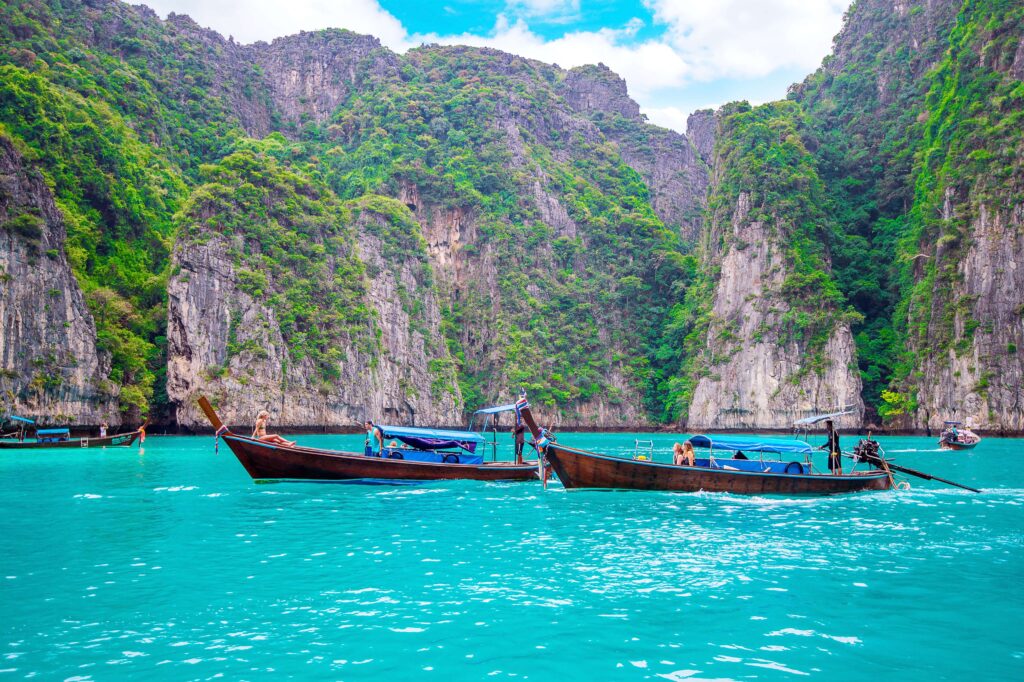
Between Phuket and Krabi, a 30-minute longtail ride from either, sits Koh Yao Noi. Most Andaman travellers speed past it on their way to Phi Phi. That’s their loss. Koh Yao Noi is one of those rare places where Thai island life still looks the way it did two decades ago — rubber plantations, stilted fishing villages, free-roaming buffalo, and a population that’s predominantly Muslim, giving the island a distinctly different cultural flavour.
There’s one main road. Get a motorbike for around 250 THB/day and explore at your own pace. The views across Phang Nga Bay toward the karsts are some of the most photographed in Thailand — and on Koh Yao Noi, they’re still yours alone.
The Best Thailand Island Hopping Itineraries
Choosing the right itinerary is what separates a brilliant trip from an exhausting one. Here’s a practical breakdown based on time available.
| Trip Length | Best Route | Key Islands |
|---|---|---|
| 7 Days | Andaman Express | Phuket → Phi Phi → Koh Lanta |
| 10 Days | Andaman Deep South | Phuket → Koh Yao Noi → Phi Phi → Koh Lanta → Koh Lipe |
| 7 Days | Gulf Classic | Koh Samui → Koh Phangan → Koh Tao |
| 14 Days | Best of Both Coasts | Phuket → Phi Phi → Koh Lanta → Surat Thani → Koh Samui → Koh Phangan → Koh Tao |
The golden rule: move every 2–3 days, not every single day. Rushing through islands means you miss the actual experience of each one. When you travel with an expert local guide, you can plan this rhythm seamlessly without spending your first afternoon on every island figuring out transport logistics.
Practical Tips for Thailand Island Hopping in 2026
Ferry Bookings and Getting Around
The backbone of any island hopping Thailand itinerary is the ferry network. The two most reliable operators on the Gulf side are Lomprayah and Seatran Discovery; on the Andaman, Phuket Ferry and Tigerline cover most routes.
Phuket ↔ Phi Phi ferries: 300–500 THB, departures 8–11 AM daily (high season). Krabi ↔ Koh Lanta: 350–600 THB, roughly 2 hours. Koh Samui ↔ Koh Phangan: 200 THB, 30–45 minutes. Koh Phangan ↔ Koh Tao: 350–500 THB, 1–1.5 hours.
Book ferries one day in advance rather than months ahead — plans change, and most tickets are non-refundable. Use 12Go.asia or Klook for reliable online booking with English-language interfaces.
When to Book Accommodation
High season (December–January, especially Christmas and New Year) is a different beast entirely. Popular islands like Koh Lipe, Koh Phi Phi, and Koh Lanta can sell out the best accommodation 4–6 months in advance during the festive period. If your dates fall between 20 December and 5 January, book accommodation the moment your flights are confirmed. A fully arranged tour with Royal Thailand Tour handles all of this for you — hotel blocks secured, ferry connections confirmed, and no last-minute scrambling.
What to Pack
Light is right. Most island activities involve water, sand, or both. Pack quick-dry clothing, reef-safe sunscreen (please — the coral reefs need it), a dry bag for electronics on ferry crossings, and at least one layer for air-conditioned overnight buses or ferries. Cash in Thai Baht matters on remote islands like Koh Lipe and Koh Mook, where ATMs either don’t exist or charge steep fees.
![[Image: packed travel bag for Thailand island hopping essentials]](data:image/svg+xml;base64,PHN2ZyB4bWxucz0iaHR0cDovL3d3dy53My5vcmcvMjAwMC9zdmciIHZpZXdCb3g9IjAgMCA3OTUgNjQ3IiB3aWR0aD0iNzk1IiBoZWlnaHQ9IjY0NyIgYnYtaW1nLXVybD0iaHR0cHM6Ly9yb3lhbHRoYWlsYW5kdG91cnMuY29tL3dwLWNvbnRlbnQvdXBsb2Fkcy9hbF9vcHRfY29udGVudC9JTUFHRS9yb3lhbHRoYWlsYW5kdG91cnMuY29tL3dwLWNvbnRlbnQvdXBsb2Fkcy8yMDI1LzExL0ljb24tMDQucG5nLmJ2LndlYnAiIGJ2LXJlc2l6ZWQtaW5mb3M9Ik5EZ3dMbkJ1WnpvME9EQXFNemt4T3pneU1DNXdibWM2TnprMUtqWTBOenN4TlRNMkxuQnVaem8zT1RVcU5qUTMiPjwvc3ZnPg==)
Thailand Island Hopping Costs: What to Budget
Thailand remains extraordinary value even in 2026. Here’s a realistic per-day budget breakdown by travel style:
| Style | Accommodation | Food | Transport | Daily Total |
|---|---|---|---|---|
| Budget | 300–600 THB (dorm/fan bungalow) | 150–300 THB | 200–400 THB | ~700–1,300 THB |
| Mid-Range | 1,200–2,500 THB (A/C bungalow) | 400–700 THB | 400–700 THB | ~2,000–3,900 THB |
| Luxury | 4,000–15,000+ THB (resort) | 1,000–2,500 THB | 800–2,000 THB | ~5,800–19,500 THB |
A typical two-week island hopping trip in mid-range comfort — including flights from Bangkok, ferries, accommodation, food, and activities — comes to approximately 50,000–80,000 THB (USD $1,400–$2,300) per person.
Hidden Gems Worth Adding to Your Thailand Islands Guide
Most Thailand islands guide articles run through the same list. Here are three places consistently overlooked.
Koh Mook (Koh Muk): In the Trang province, accessible from Koh Lanta by speedboat, this island holds one of Thailand’s genuine natural miracles — the Emerald Cave (Tham Morakot). You enter through a 78-metre pitch-black sea tunnel by swimming or longtail, emerging into a hidden lagoon open to the sky, white sand underfoot and green walls all around. Nothing prepares you for it.
Koh Ngai (Koh Hai): Practically carless, very limited development, white sand and coral reefs within swimming distance of the shore. Christmas on a beach here, as multiple travellers have noted, feels like the island was created specifically for you.
Koh Yao Yai: The larger, lesser-visited sibling of Koh Yao Noi. ATV rides through rubber plantations, kayaking through mangrove channels, and not a McDonald’s in sight. Perfect for travellers who found Koh Samui too resort-y and Phi Phi too crowded.

Frequently Asked Questions About Thailand Island Hopping
What is the best time of year for Thailand island hopping?
For the Andaman Sea (Phuket, Krabi, Koh Lipe, Koh Phi Phi), the best time is November through April, when seas are calm, skies are clear, and all ferry routes operate reliably. For the Gulf of Thailand (Koh Samui, Koh Phangan, Koh Tao), the same window applies, though the Gulf has a more forgiving shoulder season. Avoid the Andaman between June and October — monsoon conditions frequently cancel ferry services with little warning.
How many islands should I visit on a Thailand island hopping trip?
For a 7-day trip, visiting 3–4 islands is ideal, spending 1–3 nights on each. Rushing through 6 or 7 islands in a week means spending more time on boats and in transit than on beaches. For two weeks, 5–7 islands at a comfortable pace is the sweet spot. Remember: you can always come back, and most travellers who rush their first Thailand trip spend years trying to re-capture the pace they missed.
Is Thailand island hopping safe for solo travellers?
Yes — Thailand island hopping is one of the most solo-traveller-friendly experiences in the world. Major ferry operators like Lomprayah and Seatran are safe and well-regulated. The standard precautions apply: stick to reputable ferry operators (avoid unlicensed speedboats at night), secure your valuables in waterproof bags during crossings, and register with your accommodation on arrival. The tourist infrastructure across Thai islands is exceptionally well-developed.
What is the cheapest way to do Thailand island hopping?
The most budget-friendly circuit is the Gulf of Thailand route: Koh Samui → Koh Phangan → Koh Tao. Ferries between these islands cost 200–500 THB per crossing, dorm beds run 250–500 THB/night, and street food meals cost 60–120 THB. For the Andaman, budget travellers can base themselves in Krabi (cheaper than Phuket) and take day trips to Railay, Koh Phi Phi, and the Four Islands. Booking combined bus-and-ferry tickets through 12Go.asia also saves significantly over buying tickets in segments.
Do I need to book Thailand ferries in advance?
For most of the year, booking 1–3 days in advance is sufficient. The major exception is the Christmas–New Year period (20 December–5 January), when popular routes like Koh Samui → Koh Phangan and Phuket → Koh Phi Phi fill quickly. Booking weeks ahead for festive-season travel is strongly recommended. If you’re working with a tour operator, they’ll typically handle all bookings as part of the package.
Can I island hop in Thailand without a tour?
Absolutely. Independent island hopping is straightforward, with well-signposted ferry piers, English-language ticketing, and accommodation bookable online. That said, travelling with an arranged tour — particularly for first-timers — eliminates the logistical headaches: missed connections, confusion at unfamiliar piers, and overpriced last-minute accommodation. Many travellers find that a guided or semi-structured tour allows them to focus on enjoying the experience rather than managing the moving parts.
Conclusion
Thailand island hopping in 2026 remains one of the world’s great travel experiences — provided you plan it well. The three things to take away: first, choose your coast wisely based on when you’re travelling; second, slow down and spend enough nights on each island to actually experience it; and third, don’t skip the lesser-known islands like Koh Mook, Koh Yao Noi, or Koh Ngai — they often deliver the memories that stay with you longest.
Thailand’s islands haven’t lost their magic. The turquoise water is still there. The longtail boats still cut across the bay at dawn. The only thing standing between you and that experience is a plan.
Start Planning Your Thailand Island Hopping Trip with Royal Thailand Tour
Every beach you’ve imagined, every island you’ve bookmarked on Instagram, every perfect sunset you’ve seen in someone else’s travel photos — it’s all real, and it’s all waiting for you in Thailand.
Royal Thailand Tour specializes in crafting personalized island hopping itineraries that handle every detail: ferry connections, island accommodation, guided tours, and the insider knowledge that makes the difference between a good trip and an unforgettable one. Whether you’re dreaming of a two-week Andaman adventure, a Gulf coast dive and beach combo, or a private island-by-island expedition through Thailand’s most remote corners, we’ll build it around you.
Book your dream trip or start planning today by getting in touch with the Royal Thailand Tour team. The islands are waiting — and they’re more beautiful than you think.


